
Snooker rules from break-off to final black
A standard frame starts with 15 reds, six colors, and the cue ball. Pot a red for one, nominate a color worth two through seven, then return to a red. Colors are respotted while reds remain. After the last red and following color, clear yellow through black.
snooker rules: the governing sequence
A legal stroke first contacts a ball on, then pots a ball or causes any ball to reach a cushion. A foul ends the visit and normally awards at least four points. If scores tie after the final black, a respotted black is played and the next score or foul decides the frame.
The current WPBSA Official Rules of Snooker and Billiards are the base reference for standard competition. Named event regulations can modify a format, and clubs may agree house conventions, but variations should be stated before play.
Keep break score separate from frame total. A break belongs to one uninterrupted visit, while the frame score includes every visit and penalty received. This prevents most scorekeeping disputes.
Practical scorekeeping
Snooker Scoreboard is a digital scoreboard for points and frames during a physical snooker match. It records the players' agreed or refereed score rather than deciding rules calls.
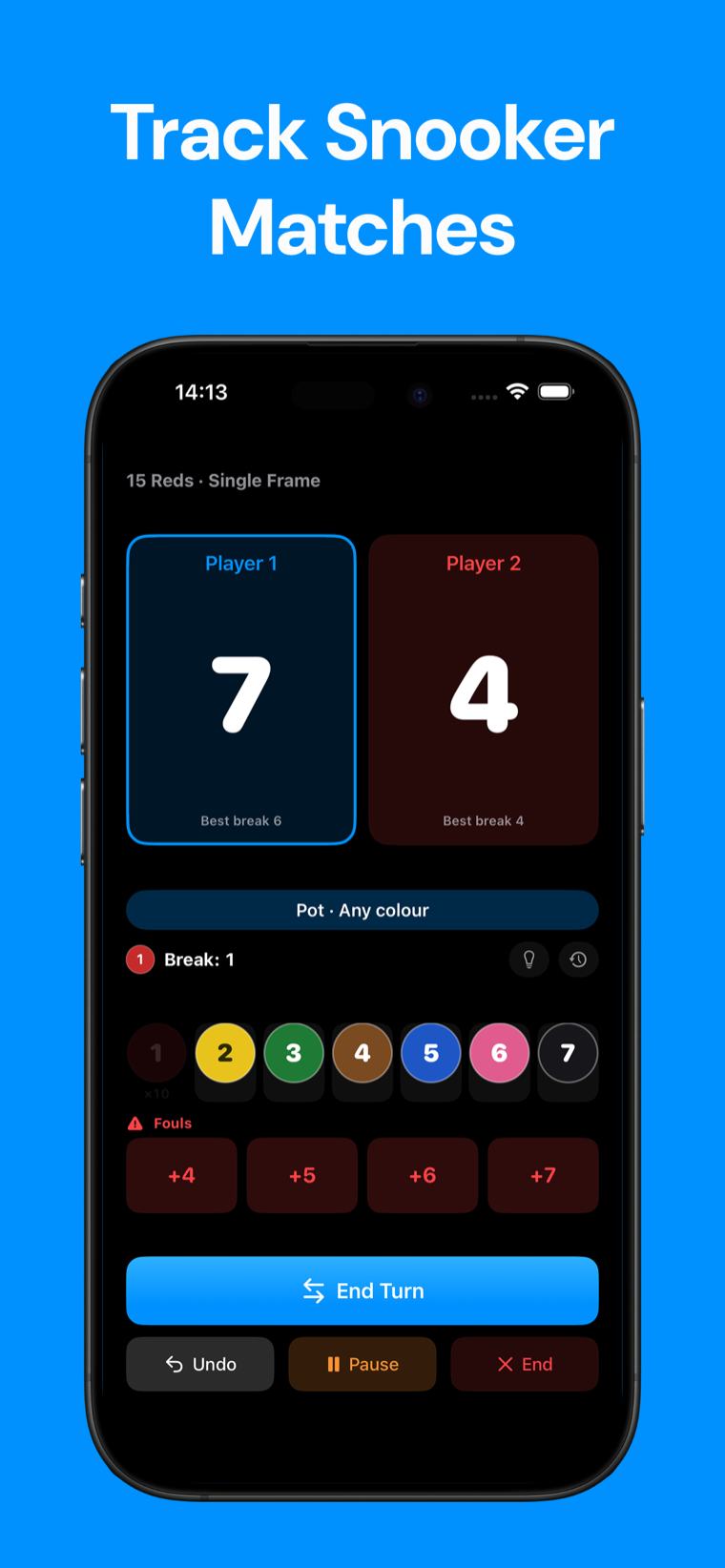
Without a referee, stop before moving balls after a disputed stroke. Consult the written rule while the position can still be reconstructed, then agree how the friendly game will continue.
Equipment size changes execution, not standard ball values. A smaller club table can alter pot difficulty and safety routes without changing the red-color scoring sequence.
Before the break-off, confirm the number of reds, match length, handicap if any, and who will make close calls. A thirty-second agreement is easier than reconstructing an assumption after a decisive stroke.
When recording a penalty, add points to the non-offending player rather than subtracting them from the striker. Preserve the score before the foul, confirm the awarded value, then resume from the position or procedure directed by the applicable rule.
A television broadcast may show the referee's result without explaining every definition. For a formal edge case, use the numbered current rule and event conditions. Commentary, memory, and local custom are useful clues but not governing text.
Practice examples with a fixed table diagram. Name the ball on, intended first contact, possible penalty, score difference, and points remaining before discussing strategy. Separating those facts keeps a tactical opinion from being mistaken for a rules call.
A score display should mirror decisions made at the table. Correct an entry promptly when all players agree, but do not let the convenience of an undo button become a substitute for establishing the correct referee or house ruling.
FAQ
Which governing rules does this guide use?
The WPBSA Official Rules of Snooker and Billiards are the base for standard play. Named WST event regulations and house variants are identified separately.
Can club players agree a different rule?
Yes in an informal game if everyone agrees first. Record the variation instead of calling it the universal official rule.
Who decides a disputed call?
In formal play, the referee applies the rules. Without one, pause, consult the written rule, and agree the next step before moving balls.
Free Snooker tools